
What is Turmeric: Benefits, Uses & Curcumin
Turmeric is an ancient spice, also known as curcuma. It is used for the many properties attributed to it and as an addition to a healthy lifestyle to support your well-being. You can benefit most by incorporating it simply and consistently into your daily habits. Avoid overly complicated routines and remain critical of exaggerated health claims. Choose a simple approach that suits you and keep things manageable so that you can assess what turmeric does for you. This allows you to stay in control and make turmeric a practical addition to your everyday lifestyle. Pay attention to your own experience and adjust your routine according to what works for you.
Table of Contents
-
How does the active compound in this root work in your body?
-
How do you incorporate this supplement into your daily life?
-
What should you look for when assessing the quality of turmeric powder?
-
Are there side effects associated with long-term turmeric use?

The rich history of turmeric in Asian cuisine.
What exactly is turmeric and where does it come from?
Turmeric, also known as curcuma, is a spice that has played an important role in Asian cuisine and traditional medicine for thousands of years. It is obtained from the rhizome of the Curcuma longa plant, which belongs to the ginger family. The plant thrives mainly in tropical and subtropical regions, with India being the largest producer. This spice is therefore not only used as a flavouring but is also valued for its unique properties, which have attracted attention for a very long time.
Traditional uses of turmeric
Turmeric originates from Southeast Asia, where it has been used for at least 4,000 years. In countries such as India and China, turmeric is a fundamental part of Ayurvedic and traditional Chinese medicine.
There, it is used not only in cooking but also for a variety of traditional purposes, ranging from promoting digestion to supporting overall vitality. The rich history and cultural significance of this rhizome demonstrate how deeply turmeric has been embedded in the lives of millions of people, long before it became popular as a supplement in the Western world.
How does the active compound in this root work in your body?
Turmeric, also known as curcuma, has been used for centuries in traditional medicine, particularly in Ayurvedic and Chinese traditions. The properties of turmeric mainly come from its active compounds, known as curcuminoids. Curcumin is the most important of these compounds. These substances give turmeric its characteristic yellow colour.
Turmeric can be found both as a powder and as a fresh root for use in cooking, while for specific purposes it is often used in concentrated form as a supplement. Understanding how these active compounds work can help you see how turmeric may play a role in supporting your well-being without requiring complicated routines.
How curcuminoids support the body
Curcuminoids, particularly curcumin, are known for their influence on various processes in the body. Some studies describe a potential influence of curcuminoids on inflammatory processes and oxidative stress, but the strength of the evidence and permitted health claims are regulated. Always consult your doctor or a qualified healthcare professional before starting supplements or changing your current routine, particularly if you have health conditions or take medication. This means that curcuminoids may support the body in maintaining the balance of these processes. Although curcumin naturally has limited absorption, supplements are often combined with piperine from black pepper to improve its bioavailability. In this way, the effectiveness of the curcuminoids in turmeric can be optimized, contributing to efficient support for your health.
Why is turmeric beneficial for your daily health?
Turmeric, also known as curcuma, is a spice that has long been used in traditional medicine, particularly in Asia. Its yellow colour comes from the active compound curcumin, which is found in the root. Curcumin is being studied for its potential effects on certain aspects of health. Under EU regulations, health claims are subject to strict conditions. Before starting or changing supplements, it is advisable to consult a doctor or qualified healthcare professional. Many people choose turmeric to support their body from within, for example to help maintain flexible joints or support digestion. It is an accessible way to support your daily well-being without immediately having to follow complex routines. Adding turmeric to your diet can be a simple step towards a healthier lifestyle.
Turmeric as part of taking good care of yourself
Incorporating turmeric into your daily routine can be a valuable part of taking good care of yourself. Your habits do not have to be perfect; small, consistent steps can make a difference. Whether you choose turmeric in cooking, as a tea or as a supplement, find a routine that suits you and is easy to maintain. For many people, the idea of a supplement routine can feel overwhelming, but a clear daily dosage can simplify things. This makes it easier to make a conscious choice for your health without complicated schedules or endless research. In this way, turmeric can contribute to a balanced approach to your well-being.
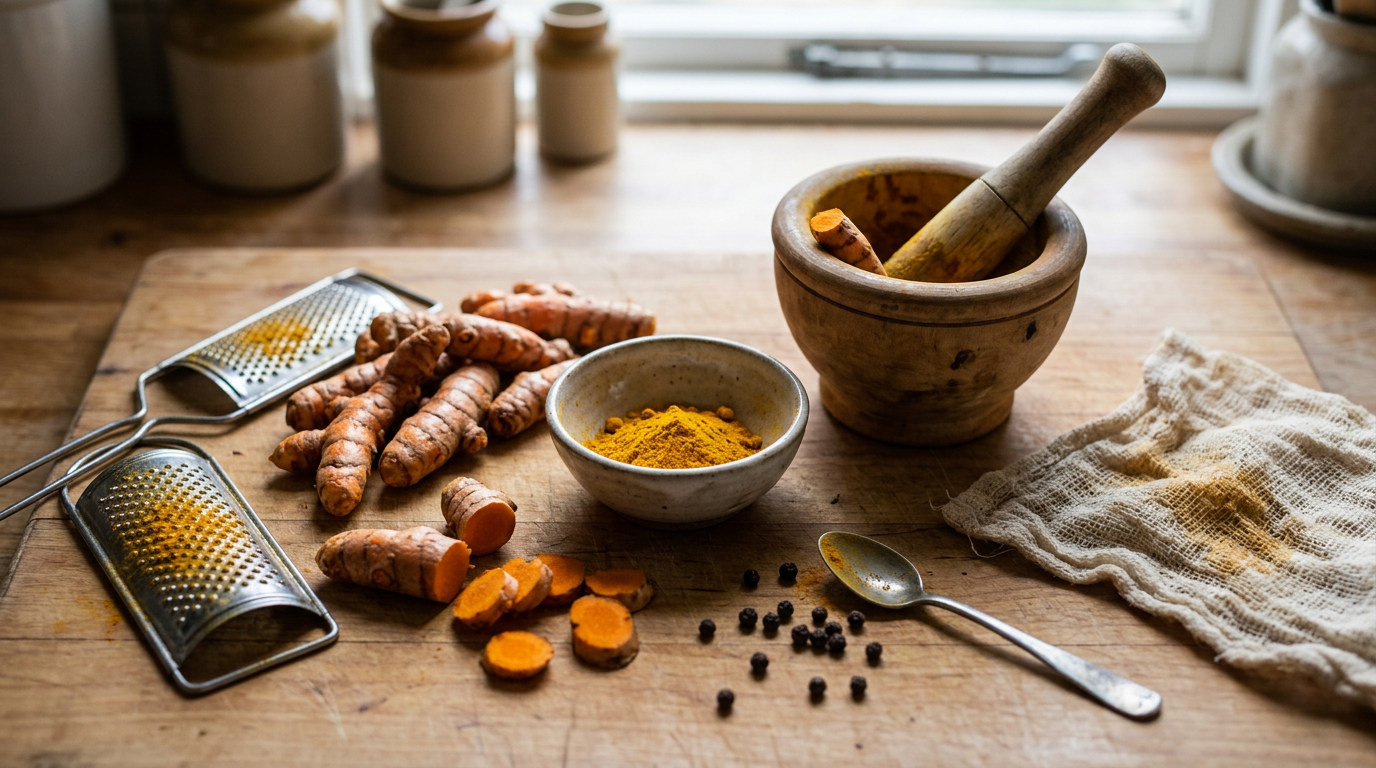
Discover how turmeric contributes to healthy natural resistance.
What effect does it have on your natural resistance?
Turmeric, also known as curcuma, is known for its active compounds, curcuminoids, which may play a role in supporting natural resistance. Although it does not provide direct protection against disease, it may contribute to maintaining a healthy immune system by supporting general processes in the body. Stable natural resistance is important for carrying out your everyday activities without interruption and feeling fit. The focus here is on gradual support rather than a quick solution.
Turmeric and overall resilience
Maintaining healthy natural resistance is an ongoing process that goes beyond nutrition alone. Factors such as sufficient sleep, stress management and regular exercise are equally important. These cards are straightforward to use and contain a daily dose, helping you build consistency into your routine. In this way, they contribute to a balanced approach to your health and overall resilience.
How do you incorporate this supplement into your daily life?
The key is simplicity and convenience so that turmeric becomes a natural addition to what you already do. For example, you can add a pinch of turmeric to your breakfast, such as in a smoothie or oatmeal, or use it in warm drinks such as golden milk. For a more structured approach, you can consider supplement cards that provide a clear daily dosage. This helps you manage your turmeric intake without much effort, making you less likely to forget it or lose track of your routine.
Consistency when taking turmeric
A practical way to integrate turmeric into your routine is to link it to an existing habit. For example, if you drink coffee every morning, you could keep your turmeric supplements next to it. For specific goals, such as supporting flexible joints, consistency is particularly important. VITBLISS has developed supplement cards for this purpose that are formulated by pharmacists and provide a clear daily dosage tailored to a specific health goal. This makes it easier to take turmeric consistently and contributes to a clear and achievable wellness routine. More information is available at vitbliss.com. Always consult your doctor or another qualified healthcare professional before starting new supplements or changing your current intake, particularly if you have existing health concerns or take medication.
What should you look for when assessing the quality of turmeric powder?
When considering turmeric powder, it is important to pay attention to several quality factors so that you can make the most of the properties of this spice. First, consider its origin. Organically grown turmeric can be a good choice because this minimizes exposure to pesticides. Colour can also be an indicator: a deep, vibrant yellow to orange colour generally indicates a higher concentration of active compounds. You should also pay attention to the packaging. It should be airtight and dark to help maintain the quality of the turmeric powder and prevent degradation caused by light and air.
The role of piperine in improving absorption
One specific factor to consider when assessing turmeric quality is the addition of piperine, a substance naturally found in black pepper. Curcumin, the main active component in turmeric, is naturally poorly absorbed by the body. Piperine may improve absorption, although the precise effects depend on the research and sources considered. This means that a smaller amount of turmeric combined with piperine may provide more effective absorption. Therefore, always check the ingredient list of your turmeric supplement or powder to see whether piperine has been added, as this can make an important difference to the bioavailability of curcumin in your body.
What are the benefits of turmeric for your joints?
Turmeric, with its active compound curcumin, has long been valued for its potential contribution to joint comfort. As people get older, many experience increased stiffness or discomfort in their joints, which can affect their freedom of movement in everyday life. Some people use curcumin to support joint comfort. Evidence is limited; if you have concerns, seek professional medical advice. Maintaining joint comfort is important for staying active and comfortable. Turmeric may offer a natural way to care for your joints so that everyday activities such as walking, bending or exercising remain easier. This can contribute to your vitality and well-being in daily life.
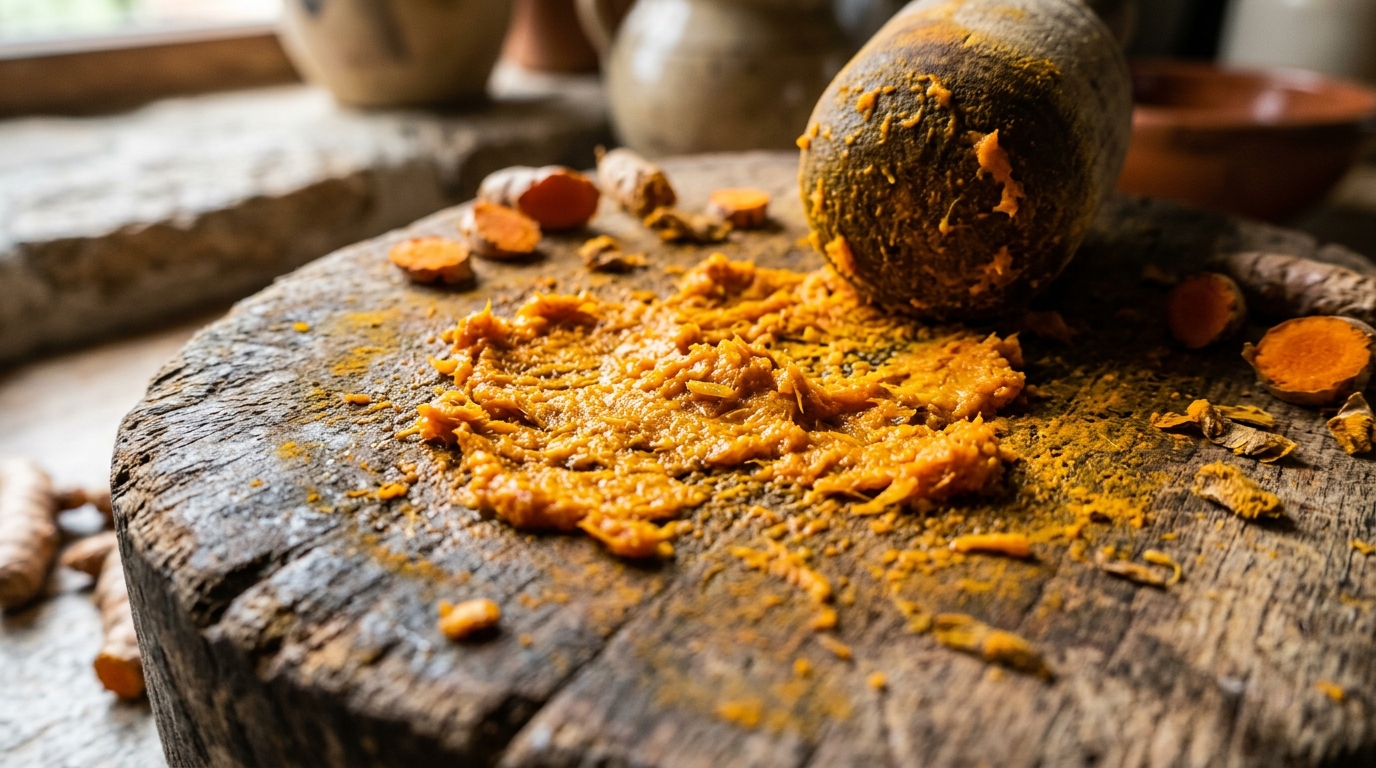
Discover how turmeric contributes to flexible joints and mobility.
The influence of curcumin on joints
The potential influence of turmeric on joint comfort comes from the way curcumin works in the body. It contributes to normal processes involved in maintaining healthy joint function. When your joints remain flexible, you may notice the difference in your overall mobility and comfort. Regularly taking turmeric may therefore be a valuable addition to your lifestyle, particularly if you feel that your joints could benefit from some extra attention.
How can you ensure optimal absorption in your body?
The effectiveness of turmeric is closely related to how well your body absorbs its active compounds, the curcuminoids. Curcumin, the main curcuminoid, is naturally not easily absorbed by the body. This is because curcumin has poor water solubility and is broken down quickly. It can therefore be useful to combine turmeric with certain other substances that may improve absorption. A commonly used method is taking turmeric together with black pepper, which contains piperine. Piperine influences the bioavailability of curcumin, and studies suggest that it may improve absorption. Always consult VITBLISS before making changes to your supplement use. Combining turmeric with fats may also help, as curcumin is fat-soluble and may be better absorbed in a fatty environment.
Integration into meals and habits
To optimize turmeric intake as part of your daily routine, you can simply pay attention to how you consume it. If you use fresh turmeric or turmeric powder in cooking, add a pinch of black pepper and some oil or fat to dishes such as curries or warm drinks. Examples include coconut oil, olive oil or whole milk. For those who prefer supplements, many products already offer optimized formulations containing piperine or other ingredients designed to improve absorption.
Our daily card has been formulated by pharmacists with digestion and intestinal health in mind. You can find this and our other cards at VITBLISS. Seek professional advice before starting a new supplement routine or changing an existing one, particularly if you have medical conditions or take medication. You can find these and other supplement cards at VITBLISS. Always consult your doctor or another qualified healthcare professional before starting or changing a supplement routine, particularly if you have medical conditions or take medication.
Are there side effects associated with long-term turmeric use?
There are several points to consider when using turmeric over the long term, particularly at higher doses.
Turmeric is generally considered safe when consumed in normal amounts as a spice. With supplements containing concentrated curcumin, the active component in turmeric, some people may experience mild gastrointestinal symptoms such as bloating, diarrhoea or stomach pain. These symptoms are generally not serious and often disappear when the dosage is adjusted. It is important to always follow the recommended dosage on the packaging and pay attention to how your body responds. You may wish to begin with a lower dosage to see how your body reacts to turmeric.
Turmeric and interactions with medication
If you take medication, it is particularly important to be cautious with turmeric supplements. Turmeric may interact with certain medications and potentially affect how they work. Examples include blood thinners, where turmeric may further affect blood clotting, or diabetes medications, where it may influence blood sugar levels. Before starting supplements containing turmeric, it is therefore always advisable to consult your doctor or pharmacist so they can assess whether the supplement is safe to use alongside your specific medication.
When can you expect the best results?
When using turmeric consistently, it is important to have realistic expectations about how long it may take before you notice any effects. Most people do not experience dramatic changes immediately after their first intake. Instead, turmeric is generally considered part of a gradual approach to supporting the body, with its active compounds, such as curcumin, requiring time. It may take some time before you notice effects, and the timeframe will depend on your personal circumstances and lifestyle. This varies considerably depending on your individual situation, overall lifestyle and consistency of intake.
Patience and a comprehensive healthy lifestyle
The patience required when assessing the effects of turmeric fits closely with the importance of maintaining an overall healthy lifestyle. Turmeric is a supplement to, rather than a replacement for, a balanced diet, sufficient exercise and good-quality sleep. These fundamental habits provide the foundation for your well-being, while supplements such as turmeric may complement them. You can best assess the effects by critically considering your overall sense of vitality and comfort rather than focusing exclusively on one specific aspect. By viewing turmeric as part of a broader approach to self-care, you can create a balanced and sustainable approach to supporting your health over the long term.
Conclusion: Turmeric
The information about turmeric demonstrates how a natural spice can play a role in supporting overall well-being, from joint comfort to digestion and natural resistance. The active compounds, known as curcuminoids, are an important part of turmeric, while their absorption can be optimized, for example, through the use of piperine. If you are considering adding turmeric to your routine, focus on the convenience of a clear and manageable approach. VITBLISS supports you with supplement cards formulated for specific health goals, helping to keep your daily turmeric intake simple and organized. This allows you to support your health in a practical and straightforward way.
At VITBLISS.com, we do not provide (medical) advice. Always consult your doctor or pharmacist before using supplements.